Showing posts with label Warren Buffett. Show all posts
Warren Buffett Tells You How to Turn $40 Into $10 Million
A few years ago, Berkshire Hathaway (NYSE: BRK-A) (NYSE: BRK-B) CEO and Chairman Warren Buffett spoke about one of his favorite companies, Coca-Cola (NYSE: KO), and how after dividends, stock splits, and patient reinvestment, someone who bought just $40 worth of the company's stock when it went public in 1919 would now have more than $5 million.
The power of patienceI know that $40 in 1919 is very different from $40 today. However, even after factoring for inflation, it turns out to be $540 in today's money. Put differently, would you rather have an Xbox One, or almost $11 million?
But the thing is, it isn't even as though an investment in Coca-Cola was a no-brainer at that point, or in the near century since then. Sugar prices were rising. World War I had just ended a year prior. The Great Depression happened a few years later. World War II resulted in sugar rationing. And there have been countless other things over the past 100 years that would cause someone to question whether their money should be in stocks, much less one of a consumer-goods company like Coca-Cola.

The dangers of timing
Yet as Buffett has noted continually, it's terribly dangerous to attempt to time the market:
"With a wonderful business, you can figure out what will happen; you can't figure out when it will happen. You don't want to focus on when, you want to focus on what. If you're right about what, you don't have to worry about when"So often investors are told they must attempt to time the market, and begin investing when the market is on the rise, and sell when the market is falling.
This type of technical analysis of watching stock movements and buying based on how the prices fluctuate over 200-day moving averages or other seemingly arbitrary fluctuations often receives a lot of media attention, but it has been proved to simply be no better than random chance.
巴菲特 给股东的信 2013 : 买本格雷厄姆的书就是最好的投资
股神巴菲特的意见是:完全不听!
每年,投资者只有两次机会看到或听到巴菲特的投资心得分享,一是柏克夏的股东大会,二是巴菲特给股东的一封信在2014年的信件中,巴菲特分享了两个收购小故事,还有一本书,娓娓道出这位传奇人士的投资之道。
Warren Buffett On Bitcoin: "Stay Away From It"
Appearing on CNBC's Squawk Box on Friday morning, the billionaire investor was asked to share his thoughts on the economy, housing market, and Bitcoin, among other topics.
When it comes to the cryptocurrency, Buffett has these words of advice to investors: "Stay away from it." Calling Bitcoin "a mirage," he took fault not with recent lapses in security that have led to a number of high-profile heists, but with Bitcoin's intrinsic value. It's safe to assume he's not the person behind the anonymous $147 million Bitcoin transaction last fall.
The chairman and CEO of Berkshire Hathaway views Bitcoin as a means of transferring money--not as a currency. "A check is a way of transmitting money too. Are checks worth a lot of money just because they can transmit money?" he asked. "The idea it has some huge intrinsic value is such a joke." Indeed, that's one of the biggest arguments critics have against the virtual currency. Unregulated and not backed by anything of value, such as gold, Bitcoin's decentralized nature is also what makes it so popular among its fans.
Some Thoughts About Investing - Warren Buffett 2013 Shareholder Letter
It is fitting to have a Ben Graham quote open this discussion because I owe so much of what I know about investing to him. I will talk more about Ben a bit later, and I will even sooner talk about common stocks. But let me first tell you about two small non-stock investments that I made long ago. Though neither changed my net worth by much, they are instructive.
This tale begins in Nebraska. From 1973 to 1981, the Midwest experienced an explosion in farm prices, caused by a widespread belief that runaway inflation was coming and fueled by the lending policies of small rural banks. Then the bubble burst, bringing price declines of 50% or more that devastated both leveraged farmers and their lenders. Five times as many Iowa and Nebraska banks failed in that bubble’s aftermath than in our recent Great Recession.
In 1986, I purchased a 400-acre farm, located 50 miles north of Omaha, from the FDIC. It cost me $280,000, considerably less than what a failed bank had lent against the farm a few years earlier. I knew nothing about operating a farm. But I have a son who loves farming and I learned from him both how many bushels of corn and soybeans the farm would produce and what the operating expenses would be. From these estimates, I calculated the normalized return from the farm to then be about 10%. I also thought it was likely that productivity would improve over time and that crop prices would move higher as well. Both expectations proved out.
I needed no unusual knowledge or intelligence to conclude that the investment had no downside and potentially had substantial upside. There would, of course, be the occasional bad crop and prices would sometimes disappoint. But so what? There would be some unusually good years as well, and I would never be under any pressure to sell the property. Now, 28 years later, the farm has tripled its earnings and is worth five times or more what I paid. I still know nothing about farming and recently made just my second visit to the farm.
In 1993, I made another small investment. Larry Silverstein, Salomon’s landlord when I was the company’s CEO, told me about a New York retail property adjacent to NYU that the Resolution Trust Corp. was selling. Again, a bubble had popped – this one involving commercial real estate – and the RTC had been created to dispose of the assets of failed savings institutions whose optimistic lending practices had fueled the folly.
Here, too, the analysis was simple. As had been the case with the farm, the unleveraged current yield from the property was about 10%. But the property had been undermanaged by the RTC, and its income would increase when several vacant stores were leased. Even more important, the largest tenant – who occupied around 20% of the project’s space – was paying rent of about $5 per foot, whereas other tenants averaged $70. The expiration of this bargain lease in nine years was certain to provide a major boost to earnings. The property’s location was also superb: NYU wasn’t going anywhere.
I joined a small group, including Larry and my friend Fred Rose, that purchased the parcel. Fred was an experienced, high-grade real estate investor who, with his family, would manage the property. And manage it they did. As old leases expired, earnings tripled. Annual distributions now exceed 35% of our original equity investment. Moreover, our original mortgage was refinanced in 1996 and again in 1999, moves that allowed several special distributions totaling more than 150% of what we had invested. I’ve yet to view the property.
Income from both the farm and the NYU real estate will probably increase in the decades to come. Though the gains won’t be dramatic, the two investments will be solid and satisfactory holdings for my lifetime and, subsequently, for my children and grandchildren.
I tell these tales to illustrate certain fundamentals of investing:
- You don’t need to be an expert in order to achieve satisfactory investment returns. But if you aren’t, you must recognize your limitations and follow a course certain to work reasonably well. Keep things simple and don’t swing for the fences. When promised quick profits, respond with a quick “no.”
- Focus on the future productivity of the asset you are considering. If you don’t feel comfortable making a rough estimate of the asset’s future earnings, just forget it and move on. No one has the ability to evaluate every investment possibility. But omniscience isn’t necessary; you only need to understand the actions you undertake.
- If you instead focus on the prospective price change of a contemplated purchase, you are speculating. There is nothing improper about that. I know, however, that I am unable to speculate successfully, and I am skeptical of those who claim sustained success at doing so. Half of all coin-flippers will win their first toss; none of those winners has an expectation of profit if he continues to play the game. And the fact that a given asset has appreciated in the recent past is never a reason to buy it.
- With my two small investments, I thought only of what the properties would produce and cared not at all about their daily valuations. Games are won by players who focus on the playing field – not by those whose eyes are glued to the scoreboard. If you can enjoy Saturdays and Sundays without looking at stock prices, give it a try on weekdays.
- Forming macro opinions or listening to the macro or market predictions of others is a waste of time. Indeed, it is dangerous because it may blur your vision of the facts that are truly important. (When I hear TV commentators glibly opine on what the market will do next, I am reminded of Mickey Mantle’s scathing comment: “You don’t know how easy this game is until you get into that broadcasting booth.”)
- My two purchases were made in 1986 and 1993. What the economy, interest rates, or the stock market might do in the years immediately following – 1987 and 1994 – was of no importance to me in making those investments. I can’t remember what the headlines or pundits were saying at the time. Whatever the chatter, corn would keep growing in Nebraska and students would flock to NYU.
There is one major difference between my two small investments and an investment in stocks. Stocks provide you minute-to-minute valuations for your holdings whereas I have yet to see a quotation for either my farm or the New York real estate.
It should be an enormous advantage for investors in stocks to have those wildly fluctuating valuations placed on their holdings – and for some investors, it is. After all, if a moody fellow with a farm bordering my property yelled out a price every day to me at which he would either buy my farm or sell me his – and those prices varied widely over short periods of time depending on his mental state – how in the world could I be other than benefited by his erratic behavior? If his daily shout-out was ridiculously low, and I had some spare cash, I would buy his farm. If the number he yelled was absurdly high, I could either sell to him or just go on farming.
Owners of stocks, however, too often let the capricious and often irrational behavior of their fellow owners cause them to behave irrationally as well. Because there is so much chatter about markets, the economy, interest rates, price behavior of stocks, etc., some investors believe it is important to listen to pundits – and, worse yet, important to consider acting upon their comments.
Those people who can sit quietly for decades when they own a farm or apartment house too often become frenetic when they are exposed to a stream of stock quotations and accompanying commentators delivering an implied message of “Don’t just sit there, do something.” For these investors, liquidity is transformed from the unqualified benefit it should be to a curse.
A “flash crash” or some other extreme market fluctuation can’t hurt an investor any more than an erratic and mouthy neighbor can hurt my farm investment. Indeed, tumbling markets can be helpful to the true investor if he has cash available when prices get far out of line with values. A climate of fear is your friend when investing; a euphoric world is your enemy.
During the extraordinary financial panic that occurred late in 2008, I never gave a thought to selling my farm or New York real estate, even though a severe recession was clearly brewing. And, if I had owned 100% of a solid business with good long-term prospects, it would have been foolish for me to even consider dumping it. So why would I have sold my stocks that were small participations in wonderful businesses? True, any one of them might eventually disappoint, but as a group they were certain to do well. Could anyone really believe the earth was going to swallow up the incredible productive assets and unlimited human ingenuity existing in America?
When Charlie and I buy stocks – which we think of as small portions of businesses – our analysis is very similar to that which we use in buying entire businesses. We first have to decide whether we can sensibly estimate an earnings range for five years out, or more. If the answer is yes, we will buy the stock (or business) if it sells at a reasonable price in relation to the bottom boundary of our estimate. If, however, we lack the ability to estimate future earnings – which is usually the case – we simply move on to other prospects. In the 54 years we have worked together, we have neverforegone an attractive purchase because of the macro or political environment, or the views of other people. In fact, these subjects never come up when we make decisions.
It’s vital, however, that we recognize the perimeter of our “circle of competence” and stay well inside of it. Even then, we will make some mistakes, both with stocks and businesses. But they will not be the disasters that occur, for example, when a long-rising market induces purchases that are based on anticipated price behavior and a desire to be where the action is..
Most investors, of course, have not made the study of business prospects a priority in their lives. If wise, they will conclude that they do not know enough about specific businesses to predict their future earning power..
I have good news for these non-professionals: The typical investor doesn’t need this skill. In aggregate, American business has done wonderfully over time and will continue to do so (though, most assuredly, in unpredictable fits and starts). In the 20th Century, the Dow Jones Industrials index advanced from 66 to 11,497, paying a rising stream of dividends to boot. The 21st Century will witness further gains, almost certain to be substantial. The goal of the non-professional should not be to pick winners – neither he nor his “helpers” can do that – but should rather be to own a cross-section of businesses that in aggregate are bound to do well. A low-cost S&P 500 index fund will achieve this goal.
That’s the “what” of investing for the non-professional. The “when” is also important. The main danger is that the timid or beginning investor will enter the market at a time of extreme exuberance and then become disillusioned when paper losses occur. (Remember the late Barton Biggs’ observation: “A bull market is like sex. It feels best just before it ends.”) The antidote to that kind of mistiming is for an investor to accumulate shares over a long period and never to sell when the news is bad and stocks are well off their highs. Following those rules, the “know-nothing” investor who both diversifies and keeps his costs minimal is virtually certain to get satisfactory results. Indeed, the unsophisticated investor who is realistic about his shortcomings is likely to obtain better longterm results than the knowledgeable professional who is blind to even a single weakness. If “investors” frenetically bought and sold farmland to each other, neither the yields nor prices of their crops would be increased. The only consequence of such behavior would be decreases in the overall earnings realized by the farm-owning population because of the substantial costs it would incur as it sought advice and switched properties.
Nevertheless, both individuals and institutions will constantly be urged to be active by those who profit from giving advice or effecting transactions. The resulting frictional costs can be huge and, for investors in aggregate, devoid of benefit. So ignore the chatter, keep your costs minimal, and invest in stocks as you would in a farm.
My money, I should add, is where my mouth is: What I advise here is essentially identical to certain instructions I’ve laid out in my will. One bequest provides that cash will be delivered to a trustee for my wife’s benefit. (I have to use cash for individual bequests, because all of my Berkshire shares will be fully distributed to certain philanthropic organizations over the ten years following the closing of my estate.) My advice to the trustee could not be more simple: Put 10% of the cash in short-term government bonds and 90% in a very low-cost S&P 500 index fund. (I suggest Vanguard’s.) I believe the trust’s long-term results from this policy will be superior to those attained by most investors – whether pension funds, institutions or individuals – who employ high-fee managers.
And now back to Ben Graham. I learned most of the thoughts in this investment discussion from Ben’s book The Intelligent Investor, which I bought in 1949. My financial life changed with that purchase. Before reading Ben’s book, I had wandered around the investing landscape, devouring everything written on the subject. Much of what I read fascinated me: I tried my hand at charting and at using market indicia to predict stock movements. I sat in brokerage offices watching the tape roll by, and I listened to commentators. All of this was fun, but I couldn’t shake the feeling that I wasn’t getting anywhere.
In contrast, Ben’s ideas were explained logically in elegant, easy-to-understand prose (without Greek letters or complicated formulas). For me, the key points were laid out in what later editions labeled Chapters 8 and 20. (The original 1949 edition numbered its chapters differently.) These points guide my investing decisions today.A couple of interesting sidelights about the book: Later editions included a postscript describing an unnamed investment that was a bonanza for Ben. Ben made the purchase in 1948 when he was writing the first edition and – brace yourself – the mystery company was GEICO. If Ben had not recognized the special qualities of GEICO when it was still in its infancy, my future and Berkshire’s would have been far different.
The 1949 edition of the book also recommended a railroad stock that was then selling for $17 and earning about $10 per share. (One of the reasons I admired Ben was that he had the guts to use current examples, leaving himself open to sneers if he stumbled.) In part, that low valuation resulted from an accounting rule of the time that required the railroad to exclude from its reported earnings the substantial retained earnings of affiliates.
The recommended stock was Northern Pacific, and its most important affiliate was Chicago, Burlington and Quincy. These railroads are now important parts of BNSF (Burlington Northern Santa Fe), which is today fully owned by Berkshire. When I read the book, Northern Pacific had a market value of about $40 million. Now its successor (having added a great many properties, to be sure) earns that amount every four days.
I can’t remember what I paid for that first copy of The Intelligent Investor. Whatever the cost, it would underscore the truth of Ben’s adage: Price is what you pay, value is what you get. Of all the investments I ever made, buying Ben’s book was the best (except for my purchase of two marriage licenses).

我的投资秘笈: 巴菲特2013股东信
Warren Buffett Finally Joins Twitter, Gains 1,000 Followers Per Minute
5/02/2013
Secret Millionaires Club
Warren Buffett Gives Kids Early Start on Investing Smarts via Cartoon

It's never too early to learn the basics of investing, right?
Famed investor Warren Buffett doesn't think so. He bought his first stock at the tender age of 11, and his first bet sparked an interest that set the stage for a lucrative career that made him one of the world's most influential investors.
Today, all grown up, the CEO of Berkshire Hathaway (BRK.A) is sharing some of his financial tips with children through the Secret Millionaires Club -- a partnership arranged by AOL (AOL) and A(2) Entertainment.
Kids can tune in to a new animated series on SMCKids.com -- where Buffett lends his voice to a cartoon character to teach children valuable financial lessons. "It's important that children become knowledgeable about finances and understand the value of basic business skills," Buffett said in a statement.
The debut episode launched today at Berkshire Hathaway's shareholder meeting. In total, there'll be 26 weekly webisodes, and a television series is also in the works.
Below is a preview of the debut episode where Buffett helps a child raise money for her school trip. Click here to view the complete episode.
宁选土地公寓基金 股神不爱淘金
●南洋商报
黄金在这些年来的飙涨走势,让许多人更热衷于进场淘金,然而,却有一个不为所动,他就是股神巴菲特。
对于黄金投资,他曾这么说过:“黄金将会是‘我选择用来储存价值的最后几种工具之一。我真的宁可在内布达斯加州持有100英亩土地,或是一栋公寓,或是一项指数基金。”
黄金与股市
在去年10月,巴菲特接受《财富》杂志访问,针对金价的提问:“黄金怎么样?这是一个经典的泡沫呢,还是什么?”
他以一贯自信的微笑,且不假思索地给出了如下回答:
“瞧,你可以把世界上所有已经开采的黄金堆起来,也就是一个不到67立方英尺(约2立方米)的金属块。按照目前的金价,这个金属块可以换全部的美国耕地,再加10个埃克森美孚,再加上1万亿美元现金。你愿意选哪一个?谁能产生更多价值?”
黄金价被高估
Fundsupermart.com(FSM)在网上发表文告指出,仔细留意巴菲特的回应,他把黄金的相对价值与美国所有耕地和埃克森美孚比较。
从这个投资角度来看,黄金价格已被高估,而该贵金属可能是一个“典型的泡沫”。
对于那些不同意全球最富有投资者的观点,可从巴菲特的回应作出进一步推断。
如果目前的黄金价格合理,这也意味着,美国所有的耕地和埃克森美孚可谓是不合理的遭低估。
缺基本面支撑
换言之,美国的农田上涨潜能将超越黄金。
自巴菲特接受该访问以来,市场已对股神的看法高谈阔论,并且对他的观点提出质疑,认为巴菲特忽视了来自全球消费者和世界各地中央银行对黄金的强劲需求,以及黄金可扮演“代替货币”的重要作用。
市场如是的反应似曾相识?是的,正如我们在2000年代初期出现类似严重被批评的情况,巴菲特曾经为他对科技股“固执”的态度引来批评。
当时,其价值投资被嘲笑已过时。然而,当科技泡沫爆发过后,所有批评者却保持沉默。
FSM认为,无论是市场萧条或繁荣期间,投资价值都可以很好的运用,并专注于基本面来判断黄金价格是否已被高估。
同时,FSM也将挑战黄金需求的共同看法,以及证明近期黄金价格上涨缺乏基本面支撑。
全球需求复苏 中印领导消费
来自新兴市场对黄金首饰的强劲需求可否支撑金价走强?FSM表示,尽管黄金首饰需求正在复苏,但其力度仍未称得上强稳。
“我们已看到,黄金首饰两大消费国——印度和中国,正领导全球金条市场复苏中。”
在2010年第四季,印度和中国对黄金首饰的需求各别增长52.8%和31.9%,且需求高于2006年第一季至2010年第四季的平均增长。
另一方面,全球其他国家对黄金首饰的需求复苏相对缓慢以及维持脆弱,特别是在先进国家,因面临收入负增长和家庭债务提高,抑制消费者对黄金的需求。
总体而言,在2010年第四季,全球对黄金首饰的需求按季上涨12.8%和按年扬8.5%至575.2吨,而这也是自2008年第三季需求最为强劲的一个季度。
然而,2010年第四季的黄金首饰需求,仅稍微高于过去5年平均每个季度的534.5吨。
经济复苏仍脆弱
FSM指出,虽然全球对黄金首饰的需求已正常化,但仍未称得上强劲,特别是在2010年第二季,不论是按季或按年,需求皆呈萎缩增长,突现经济复苏仍然脆弱。
同时,经济增长是黄金首饰需求的领先指标。
根据过去,该经济数据为黄金首饰在未来两、三个季度,大致上提供了一个形势。
巴菲特对黄金投资的看法:不是储存价值理想工具
●黄金将会是“我选择用来储存价值的最后几种工具之一。我真的宁可持有一百英亩的内布达斯加州的土地,或是一栋公寓,或是一项指数基金。”
●虽然黄金在20世纪70年代开始自由定价,黄金价格从20世纪开始的每盎司20美元,到20世纪末时只成长到400美元。
●根据历史显示,如果将保险与储存的成本计算在内,加上黄金并不像股票一样会发放股利,黄金并不是一项储存价值的理想工具。
●巴菲特强调,他并不是在主张要“相信纸币”。长久以来,我们有相当的理由替纸币担忧,但是,在这样的情形之下,黄金依然是他“最不愿意持有”的资产。
巴菲特忠告中国网友:价值投资者不应动摇信仰
无论什么时间,股神巴菲特都能成为世界关注的焦点,他的一举一动被不少投资者当做判断大势的依据,最近,他旗下的伯克希尔·哈撒韦公司召开一场 股东大会,有3.5万名投资人参加。人们不远万里从世界各地聚集到一起,就是为了得到一次直接面对巴菲特的机会。我们栏目记者付豫受巴菲特邀请,走进了著 名的小镇奥马哈。
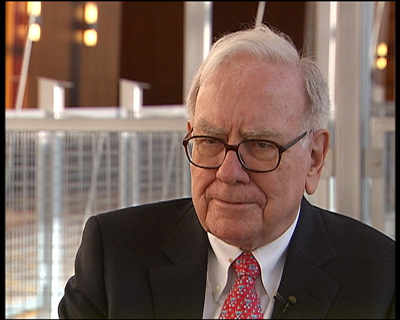
记者:“我现在是在美国内布拉斯加州的小镇奥马哈,每年母亲节的前一个星期六,都会有来自世界各地的人来到这个小镇,他们怀着一种朝圣的心理来 到这里,是为了一个人:沃伦·巴菲特,今天是伯克希尔哈撒韦公司2008年的年会,呆会有3.5万人将要进入我身后的这个中心广场。”
汇添富基金管理公司首席投资理财师刘建位:“我们公司一直遵循价值投资原则,今天看到有三万多人来参加这个盛会,我觉得非常震撼,也坚定了价值投资的信心。”
由于主会场无法容纳下所有参会的股东,所以很多人就通过广场中心的四十多个分会场设立的大屏幕上来参与股东大会,年会正式开始之前巴菲特出现在公司旗下产品的展示大厅,所到之处都被围得水泄不通。当巴菲特再次面对《经济半小时》镜头时,显得非常热情:
国际投资大师沃伦·巴菲特:“中国有一个很棒的未来,中国的发展,就像一个人的成长和释放出潜能,中国正在的成长,还会不断地更加成长,它只是刚刚开始。”
按照公司规定,股东大会的内容不能拍摄,不过通过这张公开发表的年会照片,我们也能清晰地感受到,此刻的奥马哈,因为巴菲特而涌动的激情。年会 开始之前,按照惯例要播放一个跟公司业绩相关的电影,而今年的电影由巴菲特亲自担纲表演,巴菲特说伯克西尔公司失去了3A评级,董事会建议他做做其它的工 作,因此他从公司董事长的位置上卸职转而干起了床垫促销的工作。这样的自我调侃让在现场的人不时爆发出阵阵大笑。虽然这个环节再次让我们领略到了巴菲特的 幽默,但现实却没有这么轻松,自从经济危机发生以来,伯克希尔哈撒韦公司利润已经连续5个季度下滑,评级机构将该公司评级从最高的3A级别下调,对于巴菲 特来说,他到底经历了一个怎样的2008?在本次年会上,巴菲特把唯一的15分钟专访的时间留给了中央电视台经济频道。
记者:“巴菲特先生,您最近最关注的是什么?”
沃伦·巴菲特:“美国的经济在这里是一个很重要的主题,也引起了美国总统的关注,美国的每个公民都密切关注着这个问题,这就是最主要的话题,在 美国想把负债摆脱掉,所以政府要去杠杆化,当人们开始存更多的钱,花得更少,所以美国政府要推动经济不停推动,扮演着一个很大的角色,现在经济根本的慢了 下来,经济是个很大的问题,大量发行货币会有助于推动经济复苏,但是长期来说有一个通货膨胀的危险。我们在美国有一个说法是,没有免费的午餐,每件事都有 它的后果。”
2008年,也许是巴菲特投资史上最戏剧化的一个年头。2007年12月11日,伯克希尔股价最高达到了151650美元,换算成人民币每股超 过103万元,与巴菲特最初接管公司时的18美元股价相比,最高上涨了8425倍。2008年3月5日巴菲特以620亿美元财富,把他的好朋友,屡次在财 富排名上胜他一筹的比尔盖茨请下世界首富宝座,取而代之。而就在这一年九月份,以雷曼兄弟破产为标志的一系列事件把人们对经济危机的恐慌推向顶峰,巴菲特 在他写给股东的公开信中,这样来描述他感受到的惨景:
各种类型的投资者都既困惑又遍体鳞伤,仿佛是闯入了羽毛球比赛现场的小鸟,社会上的流行语变得像我年幼时在一家餐馆墙壁上看到的标语:“我们只相信上帝,其余人等请付现金。”
但是,就在雷曼倒闭,高盛岌岌可危的时候,巴菲特突然斥50亿美元巨资购买高盛优先股,并在纽约时报上高调宣称,“我,正在买入!”,以巴菲特 在美国投资界无人能敌的号召力,这的确让美国人一度群情沸腾,此后,巴菲特又采取了大笔增持康菲石油,富国银行,等一系列的大手笔兑现了他抄底的诺言。 2008年,巴菲特在股市上投入超过320亿美元,但是,在这场深刻的经济危机面前,股神巴菲特也未能幸免,2008年年末,巴菲特遗憾的宣布,伯克希尔 哈撒韦公司的市值缩水了115亿美元。股票的每股账面价值下滑了9.6%。一年亏损9.6%。那么,到底是什么样的原因,使一向谨慎的巴菲特会在那样一个 危机重重的时刻,冒着巨大的风险来率先来高调抄底呢?
沃伦·巴菲特:“我写这篇文章的时候,说了并不知道股票会怎么样,不知今年会怎么样,但是我保证在十年以后的十月份,投资股票会比投资国债有更好的回报。”
记者:“中国有句老话,‘明知山有虎,偏向虎山行’那么回顾过去的六个月,您是否对情势有些误判,因而‘偏向虎山行’呢?”
沃伦·巴菲特:“美国的历史大概有两百年,我们可能有了十五个金融危机,在19世纪有了六个衰退,当时称其为衰退,现在叫作恐慌,但他们其实就 是会不时的发生,不等于是一个没有止境的无底洞,在每个世纪里都有一些不景气的年头,但是好年份多余坏年份,这个国家才会不停前进,我认为在中国和美国都 是这样的。”
巴菲特如何评价自己的2008?
在我们的镜头前,巴菲特一如既往地对美国经济的未来充满信心,这也正是他在危机前高调呼吁买入股票的原因。正如他常常强调的那样,别人恐惧时我 贪婪,别人贪婪时我恐惧。但无论如何,投资失利,公司价值缩水这是不争的事实,因此,有不少人说,股神这回终于走下神坛。那么巴菲特自己又是如何评价自己 的2008的呢?
巴菲特坦率地承认,2008年,是从他1965年开始管理伯克希尔公司至今的44年间业绩最差的一年。在他写给股东的公开信中,我们不止一处看到他的自嘲:
“我还犯了一些疏忽大意的错,当新情况出现时,我本应三思自己的想法、然后迅速采取行动,但我却只知道咬着大拇指发愣。”
面对115亿美元的市值缩水,巴菲特到底是不是输家?在我们得到他的回答之前,先让我们一起来看看这位七十八岁的长者,四十多年来与市场漫长较 量的结果。巴菲特执掌伯克希尔哈撒韦公司至今已有44年,这44年里,巴菲特只亏损过两年,2001年亏损6.2%,加上这次2008年亏损9.6%,其 余42年全部盈利。而2008年,美国标准普尔500指数下跌37%,这说明,巴菲特亏损了9.6%,却以27.4%的优势大幅战胜市场。再和中国股市相 比,根据银河证券基金研究中心统计,2008年沪深300(2789.219,22.14,0.80%) 指数下跌66%,中国股票型基金的平均年收益率为亏损50.63%,表现最好的基金冠军年收益率为亏损31.61%,相比而言,巴菲特亏损9.6%的业绩,远远跑赢中国所有的基金。
国际投资大师沃伦·巴菲特:“随着时间的推移,长期来说,我们还是会做得很好,我们不可能每个小时,每一天,每个星期,做得很好,可以赚钱,但 是我们放眼十年十五年或者二十年,这是我们希望看到的,我们会应该会做得很好。我们想别人买我们公司的股票,就是余生都拥有。就像你买一个农场或者公寓, 或者你住的房子,我们长期以来是吸引这样的投资者,有一个很长的眼光。”
回顾巴菲特的投资历史,他的投资回报,似乎常常能因为时间的推移而峰回路转。20世纪末,美国股市在网络股、科技股的推动下使牛市达到顶峰,但 是巴菲特始终没买一股这类股票,1999成为巴菲特历史上投资业绩最差的一次,但是在网络股泡沫破灭后,人们发现,股市连续三年跌幅超过50%,而巴菲特 这三年赚了10%,也就是说他以60%的优势高于大盘。或者再看看带着投资者大玩过山车的中石油(12.41,0.33,2.73%)。
巴非特通过中石油赚到四十亿美元后开始分批减持, 但是, 从巴菲特第一次开始减持中石油H股开始计算,中石油的累积升幅达35%,他因此少赚了至少128亿港元,不少人叹息股神失算了,但是,就在巴菲特全部清仓 中石油不到两个月的时间。中石油就开始高台跳水,中石油H股的跌幅目前超过35%,A股跌幅更是高达77%。现在就来评点巴菲特在2008年的表现,似乎 为时过早,我们的确不能预计伯克希尔公司的额的市值未来会画出怎样一个曲线,然而,无论人们如何评价与猜测,似乎都没有给巴菲特带来很大困扰。
沃伦·巴菲特:“我现在都睡得很香,睡眠一点也没问题。”
令人印象更为深刻的是,当我们拿他的去年的投资回报开玩笑时,巴菲特先生毫不介意地接了招。2007年10月,经济频道第一次采访巴菲特时,他 给记者开了个玩笑,在采访结束时,他故意大声说:付豫,让我告诉你一只很能赚钱的股票,可是他却对记者耳语说:“我不告诉你,不过这样,别人就不会老来问 我,而去问你了”。这一次见面,我们把球回给了巴菲特先生,故意纳闷的问他,为什么买了他特别推荐的股票,却在去年亏了钱,巴菲特先生立刻会心的大笑起 来。
沃伦·巴菲特:“那真是太糟糕了,我还有一个办法,把我的钱包拿去吧,哦,不行,你真要拿走吗,我得走了。”
2009年05月08日 22:14
America will overcome Country’s best days lie ahead, says Buffett
TO THE shareholders of Berkshire Hathaway Inc:
Our decrease in net worth during 2008 was US$11.5bil, which reduced the per-share book value of both our Class A and Class B stock by 9.6%. Over the last 44 years (that is, since present management took over), book value has grown from US$19 to US$70,530, a rate of 20.3% compounded annually.
The table recording both the 44-year performance of Berkshire’s book value and the S&P 500 index, shows that 2008 was the worst year for each. The watchword throughout the country became the creed I saw on restaurant walls when I was young: “In God we trust; all others pay cash.”
By the fourth quarter, the credit crisis, coupled with tumbling home and stock prices, had produced a paralysing fear that engulfed the country. A freefall in business activity ensued, accelerating at a pace that I have never before witnessed.
This debilitating spiral has spurred our government to take massive action. In poker terms, the Treasury and the Fed have gone “all in.” Economic medicine that was previously meted out by the cupful has recently been dispensed by the barrel. These once-unthinkable dosages will almost certainly bring on unwelcome after-effects. Their precise nature is anyone’s guess, though one likely consequence is an onslaught of inflation.

Moreover, major industries have become dependent on federal assistance, and they will be followed by cities and states bearing mind-boggling requests. Weaning these entities from the public teat will be a political challenge. They won’t leave willingly.
Whatever the downsides may be, strong and immediate action by government was essential last year if the financial system was to avoid a total breakdown. Had that occurred, the consequences for every area of our economy would have been cataclysmic. Like it or not, the inhabitants of Wall Street, Main Street and the various Side Streets of America were all in the same boat.
Amid this bad news, however, never forget that our country has faced far worse travails in the past. In the 20th Century alone, we dealt with two great wars (one of which we initially appeared to be losing); a dozen or so panics and recessions; virulent inflation that led to a 21½% prime rate in 1980; and the Great Depression of the 1930s, when unemployment ranged between 15% and 25% for many years. America has had no shortage of challenges.
Without fail, however, we’ve overcome them. In the face of those obstacles – and many others – the real standard of living for Americans improved nearly seven-fold during the 1900s, while the Dow Jones Industrials rose from 66 to 11,497. Compare the record of this period with the dozens of centuries during which humans secured only tiny gains, if any, in how they lived. Though the path has not been smooth, our economic system has worked extraordinarily well over time. It has unleashed human potential as no other system has, and it will continue to do so. America’s best days lie ahead.
In 75% of the last 44 years, the S&P stocks recorded a gain. I would guess that a roughly similar percentage of years will be positive in the next 44.
As predicted in last year’s report, the exceptional underwriting profits that our insurance businesses realised in 2007 were not repeated in 2008. Nevertheless, the insurance group delivered an underwriting gain for the sixth consecutive year. This means that our US$58.5bil of insurance “float” – money that doesn’t belong to us but that we hold and invest for our own benefit – cost us less than zero. In fact, we were paid US$2.8bil to hold our float during 2008. Charlie and I find this enjoyable.

Our insurance operation, the core business of Berkshire, is an economic powerhouse.
The market value of the bonds and stocks that we continue to hold suffered a significant decline along with the general market. This does not bother Charlie and me. Indeed, we enjoy such price declines if we have funds available to increase our positions. Whether we’re talking about socks or stocks, I like buying quality merchandise when it is marked down.
In 2008, our investments fell from US$90,343 per share of Berkshire (after minority interest) to US$77,793, a decrease that was caused by a decline in market prices, not by net sales of stocks or bonds. Our second segment of value fell from pre-tax earnings of US$4,093 per Berkshire share to US$3,921 (again after minority interest).
Both of these performances are unsatisfactory. Over time, we need to make decent gains in each area if we are to increase Berkshire’s intrinsic value at an acceptable rate. Going forward, however, our focus will be on the earnings segment, just as it has been for several decades. We like buying underpriced securities, but we like buying fairly-priced operating businesses even more.
Our long-avowed goal is to be the “buyer of choice” for businesses – particularly those built and owned by families.
Private equity
Some years back our competitors were known as “leveraged-buyout operators (LBO).” But LBO became a bad name. So in Orwellian fashion, the buyout firms decided to change their moniker. What they did not change, though, were the essential ingredients of their previous operations, including their cherished fee structures and love of leverage.
Their new label became “private equity,” a name that turns the facts upside-down: A purchase of a business by these firms almost invariably results in dramatic reductions in the equity portion of the acquiree’s capital structure compared to that previously existing. A number of these acquirees, purchased only two to three years ago, are now in mortal danger because of the debt piled on them by their private-equity buyers. Much of the bank debt is selling below US70¢ on the dollar, and the public debt has taken a far greater beating. The private equity firms, it should be noted, are not rushing in to inject the equity their wards now desperately need. Instead, they’re keeping their remaining funds very private.
Derivatives
Our put contracts total US$37.1bil (at current exchange rates) and are spread among four major indices: the S&P 500 in the US, the FTSE 100 in Britain, the Euro Stoxx 50 in Europe, and the Nikkei 225 in Japan. Our first contract comes due on Sept 9, 2019 and our last on Jan 24, 2028. We have received premiums of US$4.9bil, money we have invested. We, meanwhile, have paid nothing, since all expiration dates are far in the future.
Nonetheless, we have used Black-Scholes valuation methods to record a year-end liability of US$10bil, an amount that will change on every reporting date. The two financial items – this estimated loss of US$10bil minus the US$4.9bil in premiums we have received – means that we have so far reported a mark-to-market loss of US$5.1bil from these contracts.
We endorse mark-to-market accounting. I will explain later, however, why I believe the Black-Scholes formula, even though it is the standard for establishing the dollar liability for options, produces strange results when the long-term variety are being valued.
One point about our contracts that is sometimes not understood: For us to lose the full $37.1bil we have at risk, all stocks in all four indices would have to go to zero on their various termination dates.
The Black-Scholes formula has approached the status of holy writ in finance, and we use it when valuing our equity put options for financial statement purposes. Key inputs to the calculation include a contract’s maturity and strike price, as well as the analyst’s expectations for volatility, interest rates and dividends.
If the formula is applied to extended time periods, however, it can produce absurd results. I
Even so, we will continue to use Black-Scholes when we are estimating our financial-statement liability for long-term equity puts. The formula represents conventional wisdom and any substitute that I might offer would engender extreme skepticism. That would be perfectly understandable: CEOs who have concocted their own valuations for esoteric financial instruments have seldom erred on the side of conservatism. That club of optimists is one that Charlie and I have no desire to join.
The Warren Buffett style of investment
As a result, many of us would like to know his secret in investing and what makes him so successful. Many of us would like to emulate him, if not in terms of investment performance, then, at least in terms of investing style.
Many have the impression that Buffett must be very smart to have done so well. To have succeeded over such a long period, he is certainly smart. And yet in another sense, he is not that smart. Buffett has said that you do not need to have the IQ of Einstein or understand complex mathematical formulae in order to invest successfully. Compared with his mentor Benjamin Graham, or vice-chairman of his company Charlie Munger, he did not invent a new investment approach nor was he a founder of an investment theory.
Buffett is not smart in that sense. It was Graham, with his famous investment text “Security Analysis”, written in 1934, who created fundamental analysis. Buffett read it and has gained immensely from it. It was from another of Graham's books, “The Intelligent Investor”, written in 1949, that Buffett learned the central investment concept of “margin of safety”. It was Graham who started value investing. By following Graham’s investment philosophy, Buffett became very successful. But as time went by, Buffett was smart enough to recognise the inadequacies of what Graham had taught him. This realisation did not come easily nor did it dawn on him out of the blue.
Graham focused on investing in a stock that has an intrinsic value of RM1.00 and selling at 50 sen per share. It is this difference between the intrinsic value and the market price that determines the margin of safety that an investor looks for when investing in a stock. To Graham, the asset value of a company is important in calculating a company’s intrinsic value. To him, the balance sheet strength of a company is vital. This can be simply explained by the fact that he was writing “Security Analysis” in the depths of the Great Depression during which individual and corporate bankruptcies were the norm rather than the exception. Graham’s value investing was rather mechanical and essentially quantitative in approach. It was Munger, whom Buffett met in 1959, who helped transform Buffett from a strict Grahamite to what he is today.
Munger convinced Buffett that there is more to investing than just buying a share at 50 sen against its intrinsic value of RM1.00. While both Munger and Graham would start with the accounting figures, Munger would go beyond that. As he advised: “We’ve got to understand the accounting and the implications of the accounting and understand it thoroughly.” Besides assessing the direction of the general business climate of a particular business, Munger would also assess the quality of management and how a company is run.
One of the most important investment concepts that Buffett learned from Munger was to be able to identify a good business and invest in such a business at a reasonable price.
A good business is one which has a strong franchise, above average returns on equity or capital employed, a relatively small need for capital investment and a business that throws off cash. Munger advised that “the difference between a good business and a bad business is that good businesses throw up one easy decision after another. The bad businesses throw up painful decisions time after time.” Munger taught Buffett the value of great franchises and the benefit of qualitative analysis, as opposed to Graham’s strictly quantitative style focusing exclusively on tangible assets. With Munger’s coaching, Buffett realised that “when you find a really good business run by first-class people, chances are a price that looks high isn’t high. The combination is rare enough; it’s worth a pretty good price.” Hence his huge investments in stocks like Coca-Cola in 1988 although Coca-Cola was not cheap by conventional standards.
Although there are significant differences between the two, it was Graham and Munger who introduced Buffett to the central concepts of value investing. But it is to Buffett’s credit that he was able to move away from a strictly Grahamite style while the other value investors have remained in the traditional Graham mindset. It is to Buffett’s credit that he was convinced by Graham and Munger’s investment logic and rational instead of charting the modern portfolio theory mumbo-jumbo. He was smart enough to know that he had much to benefit from Graham and offered to work for him free of charge and pestered Graham for three years until he was employed. In the run-up to the technology bubble, Buffett had the genius to recognise his circle of competence, stayed within that boundary and avoided the technology stocks even though Bill Gates is his buddy. Graham stressed a diversified portfolio and would sell when a stock reaches its intrinsic value. Buffett, like Munger, has a very focused portfolio and would hold the stocks for a long time. At the end, Buffett was smart enough to pick up the right things from the right people.
Can we apply the Buffett-Graham-Munger approach to Bursa Malaysia? Yes, except that one has to be very patient, disciplined and do the necessary homework. For whatever reasons, many claim to be a follower or non-follower of Buffett without really knowing his philosophy and methodology.
Many investors have blamed the Bursa Malaysia for losses or poor returns. Many have said that the Buffett-Graham-Munger investing style cannot be successfully applied to Bursa. Many investors do not realise that the real culprit of their losses or poor performance is themselves. Do not get us wrong. i Capital is not saying that Bursa and the listed companies are perfect. There is an endless list of things that can be improved and there are plenty of companies (probably the majority of them) that do not deserve an inch of support from genuine investors. But part of the fault also lies with the investing style of investors. Have they ever asked how they would perform if they had used the same method and invested in Tokyo, London or New York? Would they have the patience or the discipline?
i Capital hopes this week’s article would be beneficial to those who are or who want to be serious investors. By sharing these insight, i Capital hopes that everyone would have some of the early advantages that Buffett had.
By TAN TENG BOO, CEO, Capital Dynamics Sdn Bhd

